How I work
I work as a Humanistic and Integrative Counsellor in private practice. Here is a little about what that means, the ideas that inform my work, and my training.
Humanistic and integrative
The 'humanistic' style of working is primarily person-centred and means that I create a safe space to focus on you as an individual and a whole person, without judgement. I work alongside you to support your development and growth as a human being.
'Integrative' means that I am professionally trained and have experience of working with other counselling approaches. This flexibility allows us to create a space and way of working that feels suited to your individual needs.
Making links between past and present
Alongside the person-centred, relational approach, I offer a psychodynamic way of working, which allows links to be made from past (often childhood) experience and patterns to the issues that arise in the here and now.
Mind and body together
I'm inspired by neuroscience and how this has informed us about trauma, human survival strategies and the importance of attunement, and, importantly, how our bodies and minds work together in our individual and relational systems.
Compassion
Much of this work is about finding a kinder relationship with yourself. Compassion, for the parts of us that struggle and for the ways we have learnt to cope, runs through how I work.
Creativity and metaphor
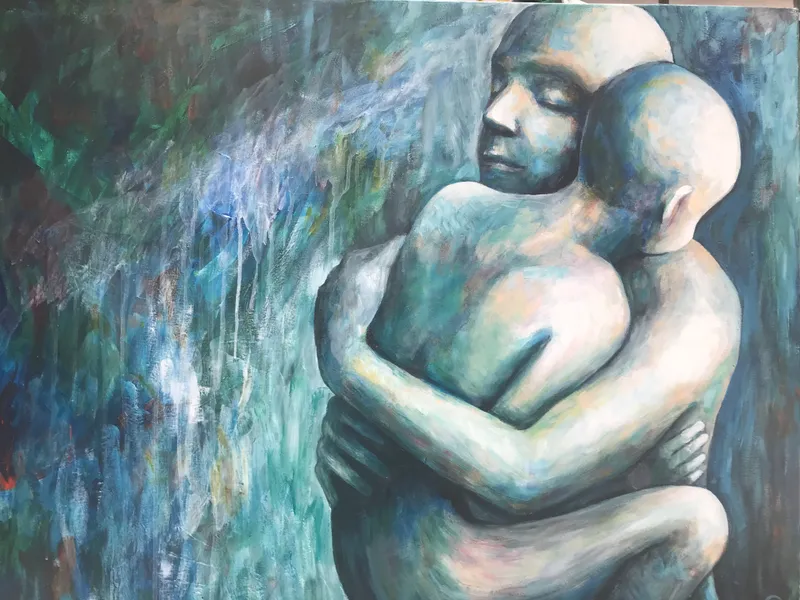
My background is in art and teaching. I believe in the power of creativity as a form of self-expression and therefore feel it can be linked to therapy. I often use metaphor as a language to explore the self and experience.
Working with trauma
I have extensive experience working with survivors of sexual abuse and sexual violence, including people experiencing the effects of post-traumatic stress.
My trauma-informed approach recognises the ways overwhelming experiences can affect both the mind and body, and I draw on a range of approaches and techniques to support this work.
Trauma can affect many of us at different points in our lives and is not always recognised as trauma. Counselling can offer space to understand these experiences and reconnect with yourself at a pace that feels manageable.
Until we find peace within ourselves we will never find peace with each other.
Training and professional membership
Qualifications
- Advanced Diploma in Humanistic and Integrative Counselling at Bath Centre for Psychotherapy and Counselling (BCPC), a nationally recognised organisation approved by the BACP
- Foundation Certificate in Psychotherapy and Counselling (BCPC)
- PGCE in Primary Teaching
- BA (Hons) in Illustration
Additional training
- Internal Family Systems
- Trauma Informed
- Shadow and Parts Work
- Somatic Processing
Membership and ethics
I am a registered member of the British Association for Counselling and Psychotherapy (BACP) and abide by their ethics and code of conduct. I attend regular supervision, where I process and reflect on my work, and I am committed to ongoing professional development.
Read more about particular kinds of work
- Counselling for trauma and the effects of abuseSexual abuse, Childhood abuse, Abusive relationships, Effects of trauma
- Counselling for anxiety, low mood and self-esteemAnxiety, Depression and low mood, Stress, Panic and overwhelm, Low self-esteem, Shame and guilt
- Counselling for relationship difficultiesRelationship issues, Identity issues, Bereavement and loss
Considering counselling takes courage. It can be a real turning point.
I offer a free 30-minute initial meeting, during which you can decide if this style of counselling feels right for you. To make contact, simply call or email and leave a message. I aim to respond within 24 hours.
£55/ 1 hour session
- Free 30-minute initial meeting
- In person in South Bristol (BS3), online (via Zoom) or by phone
- Short-term or long-term, depending on your needs
- Concessionary spaces for people on a lower income